One dashboard for the plant floor: ERP, QA, and 200+ live SCADA tags
Computer Science Engineer Intern · Voyage Foods · Mason, OH · May 2026 - Present
Voyage Foods runs manufacturing lines, and the data describing them lived in four disconnected systems. I built a React dashboard that pulls ERP, QA, and live machine telemetry into one plant-floor view, and re-platformed the historical tag storage from SQLite to PostgreSQL.
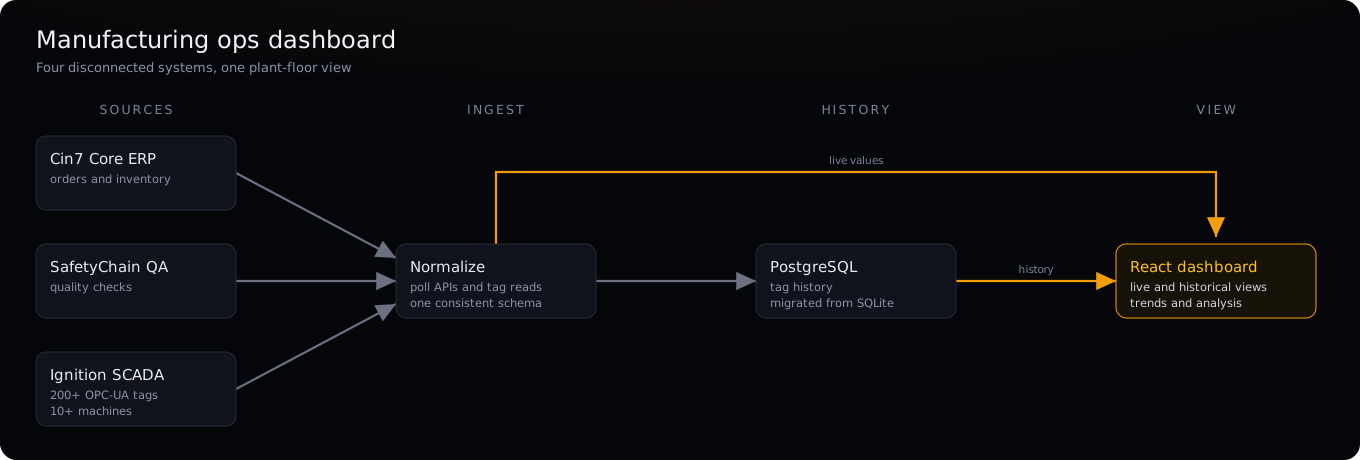
- Tag history re-platformed from SQLite to PostgreSQL without losing data.
The problem
Production data was scattered across Cin7 Core ERP (orders and inventory), SafetyChain (quality assurance), and Ignition SCADA (live machine signals). To answer a simple question about plant performance, someone had to jump between three or four tools and cross-check the numbers by hand.
On top of that, the historical PLC tag data lived in SQLite. That was fine for a prototype, but a bottleneck once we needed to retain and query hundreds of tags across many machines over time.
What I built
- 1
Unify the sources behind one interface
I built a React dashboard that pulls from Cin7 Core ERP, SafetyChain QA, Ignition SCADA, and PostgreSQL and normalizes them into one consistent view, so the plant floor and management read the same numbers.
- 2
Re-platform the tag history: SQLite → PostgreSQL
I migrated PLC tag storage from SQLite to PostgreSQL, giving the historian a database that could keep up with the write volume and the ad-hoc queries the team ran against it.
- 3
Make 200+ tags legible
I surfaced 200+ Ignition tags across 10+ production machines as graphs and analysis views, turning raw OPC-UA signals into trends an engineer can scan and act on.